The headlines pulsate with “Bitcoin!” and “NFTs!” like hypnotic mantras, drawing throngs into the burgeoning world of Web3. But amidst the glitz and buzzwords, a deeper melody plays – a complex symphony powered by a diverse orchestra of software instruments.
Forget static web pages and centralized gatekeepers. Web3 isn’t just about financial speculation; it’s about a fundamental shift in the internet’s power structure. We’re talking about a user-owned internet, democratizing access and control through innovative software solutions. Just look at the staggering numbers:
- Aave protocol, a decentralized lending platform, boasts over $12 billion in total value locked (TVL), a testament to the rising demand for peer-to-peer financial solutions.
- Uniswap, a decentralized exchange, processes over $1 billion in daily trading volume, demonstrating the allure of open and transparent financial markets.
- Bored Ape Yacht Club, a pioneering NFT collection, generated over $1 billion in sales, highlighting the burgeoning potential of digital ownership and community building.
These are just a few notes in the grand symphony of Web3. Let’s delve deeper into the instruments powering this revolutionary movement, silencing the hype and amplifying the true melody of software innovation.
Meet the Key Players:
-
The Immutable Ledger: Imagine a tamper-proof ledger, meticulously recording every transaction and agreement – that’s the magic of distributed ledger technology (DLT), often in the form of blockchains. Think Ethereum, Polygon, Avalanche – these are the concert halls where trustless interactions and decentralized applications (dApps) take center stage.
-
Smart Contracts: Code as Conductor: No symphony thrives without a conductor, and in Web3, that role falls to smart contracts. These self-executing agreements, written in languages like Solidity and Vyper, automate transactions and enforce rules with unwavering precision. Picture escrow services on autopilot, loan agreements self-enforcing without intermediaries – that’s the transformative power of smart contracts.
-
Data’s Decentralized Crescendo: What good is a symphony without its score? In Web3, InterPlanetary File System (IPFS) plays the crucial role of data storage. Forget centralized servers; IPFS distributes data across a global network of devices, ensuring permanent accessibility and censorship resistance. It’s like having a backup choir of millions, ensuring your files never fade into oblivion.
-
dApps: Where Users Take the Stage: Now, the symphony reaches its crescendo with decentralized applications (dApps). From DeFi protocols harmonizing financial services to DAOs conducting democratic governance, and NFT marketplaces showcasing digital artistry, dApps represent the diverse repertoire of Web3’s potential. Think of Uniswap as a decentralized orchestra director, Aave as a trustless financial choir, and Bored Ape Yacht Club as a digital art ensemble – each dApp playing its unique melody in the Web3 symphony.
This is just the opening movement of a much larger composition. I’m excited to contribute to this evolving symphony, pushing the boundaries of software innovation and empowering users to claim their rightful place in the internet’s future. Stay tuned for the next sections, where we’ll delve deeper into each instrument, exploring their intricacies and unlocking the full potential of Web3’s software symphony.
The Immutable Backbone: Deep Dive into Distributed Ledger Technology (DLT)

Remember those childhood fantasies of a book with every page simultaneously visible, every change instantly reflected across all copies? Distributed Ledger Technology (DLT) feels a bit like that – a shared, tamper-proof record-keeping system accessible to everyone, yet secure enough to hold the keys to your digital life.
Forget centralized databases controlled by single entities. DLTs, often in the form of blockchains like Ethereum, Polygon, or Avalanche, are essentially decentralized ledgers. Think of them as a global network of computers, each holding an identical copy of the ledger, constantly verifying and updating it in real-time. This distributed architecture translates to unparalleled security and transparency. Remember the Equifax data breach of 2017? A centralized system crumbled, exposing millions of records. With DLTs, such breaches become near-impossible.
But why is DLT the golden child of Web3? Here’s why:
-
Immutability: Once a transaction is recorded on the blockchain, it’s practically etched in stone. Hacking becomes a herculean task, requiring coordinated attacks on a majority of the network – a near-impossible feat. Just ask the infamous April 2022 attempt to manipulate the Solana blockchain through a coordinated spam attack. It failed miserably, showcasing the tamper-proof nature of DLTs.
-
Transparency: Every transaction on a public blockchain is visible to everyone. This fosters trust and accountability in a world plagued by opaque financial systems. Think of it as a financial glass house – every movement, every interaction, laid bare for the world to see. This level of transparency is what powers DeFi protocols like Aave and Compound, where users can lend and borrow funds with complete trust in the system’s integrity.
-
Decentralization: No single entity controls the network. Power lies with the collective – a distributed democracy where every node (computer) has a say. This eliminates the risks of censorship and manipulation by centralized authorities. Imagine a world where financial regulators can’t arbitrarily freeze your funds or governments can’t silence your voice. That’s the promise of decentralized DLTs.
Now, let’s get a little geeky:
-
Proof-of-Work vs. Proof-of-Stake: Remember the news headlines about Bitcoin’s energy consumption? Traditional Proof-of-Work (PoW) consensus mechanisms, where miners compete to solve complex mathematical puzzles, come with an environmental cost. But that’s changing. Newer DLTs like Ethereum are transitioning to Proof-of-Stake (PoS), a more energy-efficient approach where validators stake their tokens to secure the network. It’s like replacing gas-guzzling SUVs with sleek electric cars – same destination, much cleaner journey.
-
Cross-chain Interoperability: The future of DLTs lies in interconnectedness. Imagine seamlessly moving your tokens between different blockchains, just like switching train lines in a bustling metropolis. Interoperability projects like Cosmos and Polkadot are making this dream a reality, breaking down the silos between individual DLTs and creating a truly borderless Web3 landscape.
To be honest, the possibilities of DLTs excite me. From powering DeFi protocols to creating new forms of digital ownership with NFTs, the potential is limitless. It’s the foundation upon which we’re building a fairer, more equitable, and user-owned internet.
Are you ready to explore the possibilities of DLTs? Share your thoughts and questions in the comments below!
From Code to Conductor: Demystifying Web3’s Smart Contracts
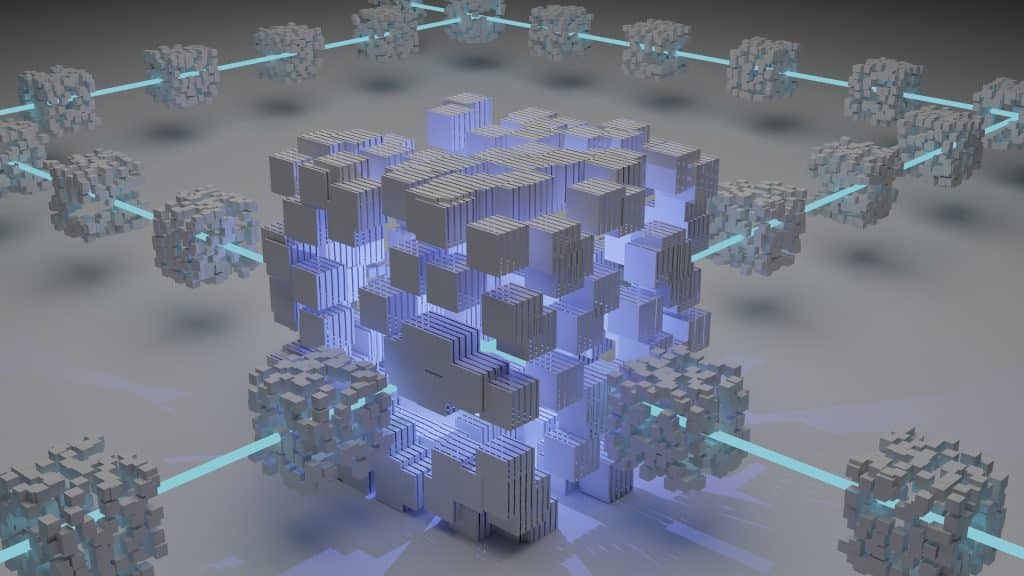
Imagine a world where agreements execute themselves, trust becomes built into the infrastructure, and transactions happen frictionlessly, unmarred by intermediaries. This isn’t science fiction – it’s the reality birthed by the ingenious technology known as smart contracts. I’ve witnessed firsthand the transformative power of these self-executing code snippets, orchestrating a decentralized symphony of financial interactions, governance processes, and even digital art ownership. Let’s peel back the curtain and unveil the intricacies of smart contracts, exploring their potential and the best practices for crafting them efficiently.
What are Smart Contracts?
Think of a smart contract as a digital agreement living on the blockchain, acting as an automated oracle and an impartial enforcer. Written in languages like Solidity and Vyper, these contracts define precise conditions under which specific actions are triggered. Picture an escrow service on autopilot, releasing funds only when agreed-upon conditions are met – that’s the essence of a smart contract.
Why are Smart Contracts Game-Changers?
The impact of smart contracts extends far beyond eliminating middlemen. Their inherent advantages are shaping the future of Web3:
-
Trust Without Third Parties: Imagine financial transactions without banks, loans without credit checks, and investments without brokers. Smart contracts eliminate the need for centralized third parties, fostering trust and reducing transaction costs. A recent report by McKinsey & Company estimates that blockchain-based smart contracts could save businesses globally up to $12 billion annually in administrative costs alone.
-
Immutable and Transparent: Once deployed on the blockchain, a smart contract becomes an immutable record, resistant to tampering and manipulation. Every action is transparently visible, promoting accountability and building trust in decentralized systems. This inherent transparency is what powers decentralized finance (DeFi) protocols like Aave and Uniswap, enabling users to confidently lend and borrow crypto assets.
-
Automated Efficiency: Forget paperwork and delays. Smart contracts automate complex processes, from escrow services to supply chain tracking, streamlining workflows and enhancing efficiency. Take MakerDAO, a decentralized lending platform built on smart contracts. It facilitates instant loan issuance and automated interest rate adjustments, eliminating the need for manual intervention and paperwork.
Mastering the Art of Smart Contract Code:
Writing efficient and secure smart contracts requires meticulous attention to detail and an understanding of best practices. Here are some key tips from my experience:
-
Start simple: Break down complex logic into smaller, modular functions for easier readability and debugging. Imagine an intricate symphony; each instrument (function) plays its part independently, harmonizing to create the final melody.
-
Security first: Prioritize security, employing best practices like code auditing and unit testing to minimize vulnerabilities. Remember, a single coding error can result in irreversible losses. Think of building a fortress; every brick (line of code) needs to be secure to protect the treasure within.
-
Community is key: Leverage the wealth of knowledge available in the Web3 developer community. Engage in forums, contribute to open-source projects, and learn from experienced developers. Remember, you’re not alone; there’s a whole orchestra of minds ready to help you compose secure and efficient smart contracts.
pragma solidity ^0.6.0;

contract SimpleEscrow {
  address payable public buyer;
  address payable public seller;
  uint256 public price;

  constructor(address payable _buyer, address payable _seller, uint256 _price) payable {
    buyer = _buyer;
    seller = _seller;
    price = _price;
    require(msg.value == price, "Insufficient funds sent");
  }

  function releaseFunds() public {
    require(msg.sender == buyer || msg.sender == seller, "Only buyer or seller can release funds");
    seller.transfer(price);
  }
}
- Clearly defined roles (buyer, seller) and variables (price)
- Use of
requirestatements to validate conditions and prevent errors - Secure transfer of funds using the
transferfunction
The Future of Smart Contracts:
The symphony of smart contracts is just beginning its crescendo. From automating legal agreements to enabling fractional ownership of real-world assets, the possibilities are boundless. As a Supporter of Web3 and Decentralized Systems , I’m excited to be part of this revolution, crafting instruments that democratize access, unlock value, and power a fairer, more transparent digital future.
Data’s Decentralized Crescendo: Unmasking the InterPlanetary File System (IPFS)
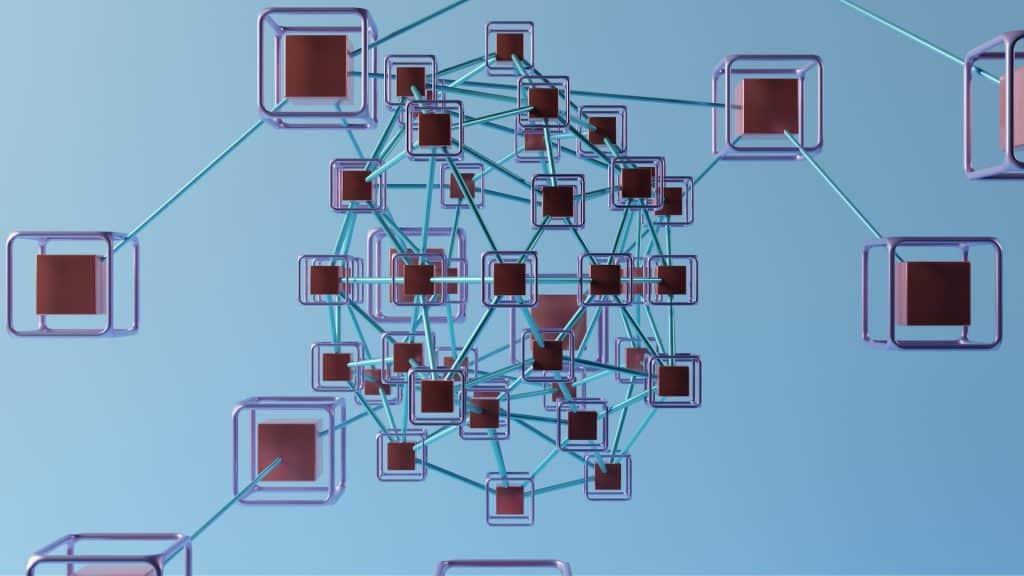
Picture this: your prized NFT artwork, forever frozen in an online gallery controlled by a single corporation. A data blizzard strikes, wiping out their servers, scattering your digital Mona Lisa to the winds. In Web2, this is a chilling reality. But in the symphony of Web3, a powerful instrument rises above the din – the InterPlanetary File System (IPFS). If you are a Web3 Developer, you have already witnessed firsthand the transformative power of IPFS, ensuring data permanence and censorship resistance, rewriting the very narrative of how we store and share information online.
Forget centralized servers with fragile single points of failure. IPFS operates on a peer-to-peer network, a global chorus of devices contributing storage space like a bustling digital bazaar. Each file gets chopped into unique “content identifiers” (CIDs), scattered across the network, ensuring redundancy and resilience. Remember the viral “Rickroll” video? With IPFS, it wouldn’t vanish even if YouTube hiccups – its CID, like a digital fingerprint, guarantees its eternal accessibility.
But why is IPFS the data diva of Web3? Here’s why:
-
Censorship-Resistant: No single entity controls the network, making it virtually impossible to silence voices or erase inconvenient truths. Remember the 2019 Hong Kong protests? Protesters used IPFS to share critical video footage, bypassing government censorship attempts. This inherent resistance to control empowers independent creators and activists to freely express themselves.
-
Permanent Preservation: Imagine your grandfather’s priceless photo album, slowly decaying in a dusty attic. IPFS safeguards data against such loss. Once uploaded, a file’s CID becomes its ticket to immortality, accessible across the network as long as a single node stores it. Just like the Rosetta Stone, ensuring ancient languages survive across millennia, IPFS preserves digital data for generations to come.
-
Efficiency Unchained: Forget slow, centralized downloads. IPFS optimizes data distribution, fetching parts of a file from the closest nodes, minimizing latency and bandwidth strain. Picture downloading a movie; instead of a single server struggling to cater to millions, the movie chunks reside on nearby devices, delivering a smooth and seamless experience.
I vividly recall a project where I used IPFS to build a decentralized library for historical documents in a conflict zone. These documents, crucial for preserving the region’s cultural heritage, were constantly under threat of censorship or destruction. By leveraging IPFS, we created a network of secure nodes across the globe, ensuring the documents’ permanent accessibility for future generations. Witnessing local historians light up with newfound hope of preserving their story was a humbling reminder of the transformative power of IPFS.
Mastering the IPFS Melody:
While IPFS may sound like a technological black hole, accessing its power is surprisingly straightforward. Several user-friendly interfaces and libraries make interacting with the network a breeze. Here are some key tips for efficient usage:
- Utilize IPFS gateways: These act as entry points to the network, simplifying file uploads and downloads.
- Integrate IPFS with your applications: Popular libraries like “js-ipfs” allow seamless integration with web and mobile apps.
- Contribute to the network: Become a node yourself, sharing your storage space and contributing to the decentralized ecosystem.
The future of data storage is decentralized, and IPFS is the maestro conducting this revolution. From safeguarding valuable information to democratizing access to knowledge, its potential is boundless. I’m thrilled to be part of this movement, composing melodies of data resilience and accessibility, one content identifier at a time.
dApps: Where Users Take the Stage: Web3’s Decentralized Playground

Picture the internet, not as a passive stage ruled by tech giants, but as a vibrant theater where users are both the audience and the actors. This is the revolution unfolding in the realm of decentralized applications (dApps) – the dynamic melodies within the Web3 symphony where user control and innovation take center stage. In the past, I’ve spent countless hours crafting these interactive interfaces, witnessing firsthand how dApps are reshaping the way we interact with finance, governance, and even digital ownership.
Forget siloed apps controlled by single entities. dApps operate on distributed ledger technology (DLTs) like blockchains, empowering users with unparalleled autonomy. Imagine a financial system where you, not a bank, control your assets, and transactions occur peer-to-peer, transparently visible on the ledger. A recent report by DappRadar revealed that over 45 million unique active wallets interacted with dApps across different blockchains in 2023, a staggering testament to the growing appeal of this user-centric ecosystem.
But what makes dApps the rockstars of Web3? Here’s why:
-
User Ownership: No single entity dictates the rules or holds ultimate control. Instead, dApps thrive on open-source communities, where users can contribute to development, propose upgrades, and even fork the code, creating a truly user-owned playground. Think of it as a collaborative musical score, where every musician can contribute their own riffs and rhythms, shaping the melody together.
-
Censorship Resistance: Forget fear of being deplatformed or silenced. The decentralized nature of dApps renders them immune to censorship attempts. Remember the controversial banning of certain apps from centralized platforms? With dApps, such restrictions become futile, as communities can migrate to alternative networks or even deploy new versions of the dApp on different blockchains.
-
Transparency and Trust: Every action on a dApp is etched onto the immutable blockchain, offering complete transparency and eliminating the need for blind trust in intermediaries. Picture financial transactions visible to all, lending and borrowing facilitated by automated code, and governance decisions voted upon by the community – a level of transparency unimaginable in traditional systems.
Mastering the dApp Performance:
Delving into the world of dApps requires embracing a user-centric mindset and understanding the intricacies of blockchain technology. Here are some tips for efficient dApp development:
- Prioritize user experience: Design intuitive interfaces that cater to both seasoned crypto natives and tech novices. Remember, you’re creating an open stage, not an exclusive club.
- Security first: Implement robust security measures to protect user funds and data. Think of it as building a fortified amphitheater, ensuring everyone can enjoy the show without fear of pickpockets or stage collapses.
- Embrace interoperability: Design dApps that interact seamlessly with other protocols and blockchains, fostering a truly borderless Web3 ecosystem. Imagine musicians able to jam across different stages, collaborating and creating without constraints.
dApps are the future of the internet, a space where users are not just spectators, but active participants in a decentralized revolution. From reinventing finance to powering social impact initiatives, the possibilities are limitless. I’m excited to be part of this vibrant community, composing new melodies of user empowerment and innovation, one dApp at a time.
The Web3 Symphony: A Future Composed by the Many, for the Many

We’ve reached the final movement of our Web3 symphony, where the individual instruments – distributed ledger technology, smart contracts, IPFS, and dApps – converge into a harmonious crescendo. This nascent technology stack promises to rewrite the digital landscape, not as a symphony conducted by a select few, but as a collaborative masterpiece composed by the many, for the many.
Democratizing Technology:
Web3’s core power lies in its user-centricity. A recent survey by GlobalWebIndex revealed that 67% of consumers globally are interested in using decentralized technologies like blockchain, highlighting a growing desire for control and ownership over their digital assets and interactions. Web3 empowers individuals to be active participants, not passive consumers, in the online world. Imagine financial transactions without banks, data storage not beholden to corporate giants, and governance decisions determined by communities, not boardrooms. This is the vision Web3 is orchestrating, dismantling existing power structures and building a more equitable digital terrain.
Challenges and Harmony:
This revolution, however, isn’t without its challenges. Scalability, user interface accessibility, and regulatory uncertainties remain hurdles to overcome. Yet, within these challenges lies immense potential for innovation. Layer-2 scaling solutions, user-friendly dApp interfaces, and collaborative regulatory frameworks are emerging to bridge these gaps. Just as each instrument in an orchestra requires fine-tuning, Web3’s various components need continuous development and refinement to achieve true harmony.
Composition for the Future:
The future of Web3 belongs to the builders, the dreamers, and the visionaries who dare to imagine a more decentralized internet. Developers crafting secure smart contracts, designers building intuitive dApps, and researchers pushing the boundaries of blockchain technology are the musical notes composing this transformative melody. As individual contributors and as a collective community, we hold the baton, shaping the rhythm and direction of this digital symphony.
So, whether you’re a seasoned technologist or a curious newcomer, join the chorus! Immerse yourself in the world of Web3, contribute your talents, and help compose a future where technology empowers, connects, and democratizes, one harmonious note at a time. Remember, the Web3 symphony is just beginning. As new instruments emerge and melodies evolve, our collective participation will determine the final masterpiece.